PSHE
Curriculum intent:
We believe PSHE is fundamental to personal development, wellbeing and future success. Our PSHE curriculum aims to equip pupils with knowledge, understanding, skills and attributes needed to thrive as confident, healthy and responsible individuals in a diverse and modern Britian.
Through a carefully planned, progressive and inclusive curriculum, we enable children to develop emotional literacy, resilience and independence. We provide opportunities for pupils to build positive relationships, understand and manage emotions, celebrate diversity and develop respect for themselves and others.
Our PSHE curriculum supports children understand keeping physically and mentally healthy, staying safe online and offline and make choices about wellbeing. We encourage recognition of strengths, embracing challenges and developing confidence to express views respectfully.
The PSHE curriculum reflects guidance for Relationships Education and Health Education and is responsive to the needs of pupils and wider community. By providing safe, supportive and inclusive learning environments, we empower children to develop knowledge and skills needed for lifelong learning and positive participation in society.
What does learning look like in our school?
Our PSHE curriculum is delivered through the Jigsaw programme and taught via weekly lessons. Jigsaw is a comprehensive and progressive scheme of work that supports children’s personal, social, emotional and mental wellbeing.
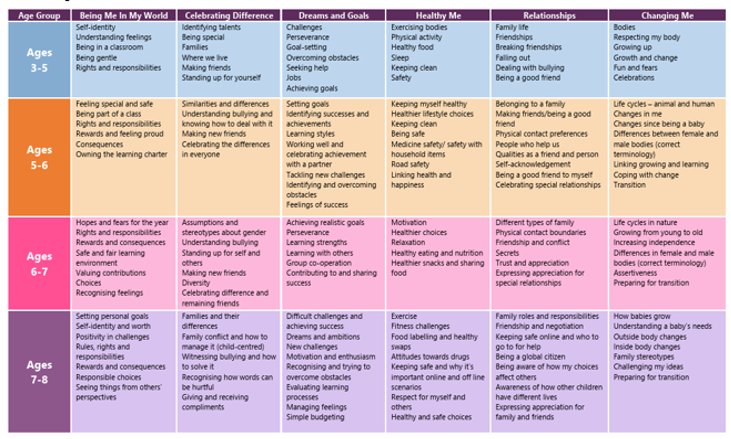
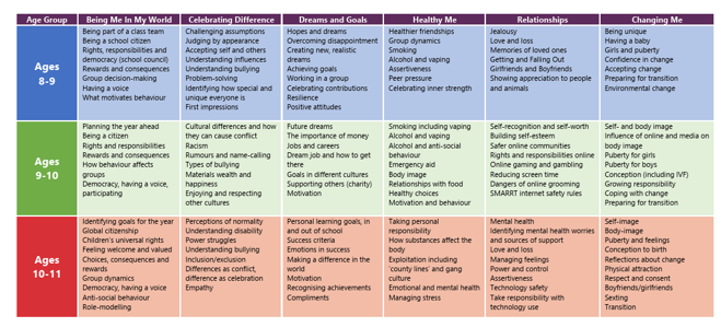
Jigsaw brings together Personal, Social, Health and Economic (PSHE) education, emotional literacy, social skills and mindfulness in a clear, age-appropriate sequence from Reception to Year 6. Through six half-termly themes – Being Me in My World, Celebrating Difference, Dreams and Goals, Healthy Me, Relationships and Changing Me – pupils develop the knowledge, skills and understanding they need to build positive relationships, stay safe, manage their wellbeing and become confident, responsible members of society.
The Jigsaw Knowledge Organiser details the content taught across ages 4 to 11 years:
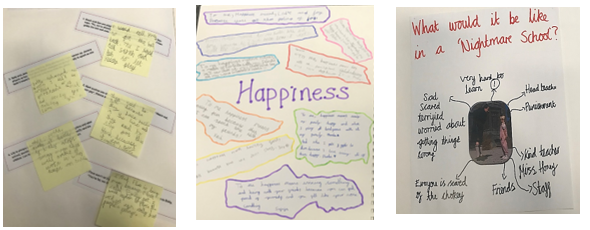
Outcomes of Jigsaw learning are captured and recorded in class PSHE floor books. The photographs below illustrate a sample of learning from across Key Stage 1 & Key Stage 2.
Progression for Consent
Download: Jigsaw Progression Map for Consent
How can families support at home?
Supporting your child’s learning in PSHE at home does not require formal lessons as the most effective approaches are part of everyday family life as many of the most valuable opportunities arise through everyday conversations and experiences.
For instance:
- Talking with your child about their experiences, feelings and friendships. Asking open questions such as, “What made you smile today?” or “Did anything worry you?” can encourage children to share their thoughts and feelings.
- Help your child recognise and name a range of emotions, such as proud, nervous, frustrated or excited. Reading stories together and discussing how characters feel can support children in understanding and managing their own emotions.
- Children learn a great deal by observing the adults around them. Demonstrating kindness, respect, empathy and good communication helps children develop positive relationship skills.
- Support your child to develop healthy habits by encouraging regular physical activity, balanced meals, good sleep routines and personal hygiene practices.
- Talk regularly about how your child uses technology and agree clear family expectations for screen time and internet use. Remind children that they should always speak to a trusted adult if something online makes them feel uncomfortable or worried.
❤️ PSHE – Useful Websites
BBC Bitesize – PSHE – Child-friendly information and activities covering friendships, emotions, health, relationships, safety and growing up.
NSPCC – Talk PANTS – Simple, age-appropriate resources to help parents talk to children about body boundaries, staying safe and speaking to a trusted adult.
Childline – A child-friendly website offering advice and support about feelings, friendships, bullying, worries and staying safe.
Place2Be – Resources and advice to help children understand and talk about their emotions and mental wellbeing.
YoungMinds – Helpful advice for parents about children’s emotional wellbeing, mental health and supporting children through difficult feelings.
Thinkuknow – Age-appropriate activities and advice to help children learn about relationships, online safety and making safe choices.